
There are still travelers looking for hotels: attract more direct bookings by paying only for actual stays
News
July 13, 2026


Demand for hotels remains strong. It doesn't always follow the same pattern; guests don't always book as far in advance, and they don't always make a reservation after their first interaction. But they continue to search, compare, and make decisions.
According to recent data shared by Google, travel intent in Europe remains high, and 85% of hotel clicks for the peak months are concentrated after May, confirming that there is still a real opportunity to capture active demand.
For hoteliers, the question is no longer just whether there is demand. The important question is: Am I prepared to capture that demand profitably, without jeopardizing my budget?
That’s where a “Pay-Per-Stay” metasearch strategy becomes a key driver for small chains looking to grow their direct sales with control, visibility, and profitability.
There's still demand, but you have to be there when the traveler makes a decision
Traveler behavior is changing. Travelers are planning more, comparing more, and making decisions more carefully. According to recent data shared by Google, 59% of European travelers have not yet finalized their summer plans, which opens a window of opportunity for hotels that know how to be visible at key moments during the search and comparison process.
In addition, interest in nearby, safe, and reliable destinations is on the rise. Europe and Latin America are showing stable demand trends, and destinations such as Spain, Italy, and France are emerging as strong options in the western Mediterranean.
What does this mean for your hotel?
There are still travelers in the decision-making phase.
There are still searches with genuine intent.
There is still room to attract direct bookings.
But it also means that simply “being there” isn’t enough. You have to be on the right channel, with the right message, and with an investment model that safeguards profitability.
Metasearch engines: where search queries are already targeted
When a user visits a metasearch engine, they aren't just looking for inspiration. They're comparing prices, availability, location, terms, and trustworthiness.
In other words, you're much closer to making a reservation.
That is why metasearch engines remain one of the most effective platforms for capturing high-intent hotel demand. They allow hotels to compete directly with OTAs and other intermediaries in the very space where travelers are evaluating their final decision.
The advantage of the direct channel is clear:
- It displays your official price alongside those of other distributors.
- You recover the demand that might otherwise end up with intermediaries.
- You increase visibility when customers are comparing options.
- You attract qualified traffic to your booking engine
- You optimize customer acquisition costs by focusing on actual production.
And when this environment is activated under a CPA/Pay-Per-Stay model, the proposal becomes even more compelling.
CPA Model: No stay, no cost
The biggest challenge for many small chains isn't just attracting more customers. It's doing so without driving up customer acquisition costs.
Investing in CPC can be effective, but it also involves taking on more risk: you pay for clicks, whether they convert or not. If the user doesn't make a reservation, cancels, or doesn't complete the stay, the cost has already been incurred.
With Roiback's CPA (Cost Per Action) or Cost Per Stay model on metasearch engines, the approach changes:
Your hotel only pays for completed reservations. If there's no stay, there's no charge.
This makes marketing an investment directly linked to production. Rather than an advertising expense, it becomes a growth driver aligned with actual revenue.
For hoteliers, the benefits are clear:
- Lower investment risk.
- More predictable customer acquisition costs.
- Greater control over profitability.
- Payment is based on actual stays.
- Better alignment between marketing, distribution, and financial management.
At a time like this, when demand exists but travelers are making more cautious decisions, this model allows us to increase visibility without unnecessarily straining the budget.
From “Pay-Per-Stay” to Actively Attracting Current Demand
Back in March, we discussed “Pay-Per-Stay” metasearch engines as a risk-free hotel marketing strategy to boost direct sales. The message was clear: attract high-intent traffic by paying only for completed bookings.
Now, recent market data further reinforces that view.
If the traveler keeps searching, if the decision window remains open, and if hotel clicks continue to be concentrated at key moments during the season, the hotel cannot afford to disappear just when demand is comparing options.
The CPA model doesn't just reduce risk. It also allows the hotel to be there exactly when there is still demand to be captured.
Travelers are looking for value, flexibility, and trust
Today's traveler isn't necessarily looking for the cheapest option. They want to feel like they're making a good decision.
According to recent data shared by Google, 47% of consumers behave like“value seekers”: users who are more sensitive to perceived value, guarantees, and the certainty of their choice. Among the motivations for making a reservation, factors such as flexibility and guarantees (46%) and special offers (31%) stand out.
This is especially important for the direct channel.
Because a hotel can compete more effectively when it showcases not only price but also value. Stand out by:
- Better direct terms.
- Exclusive benefits.
- Flexible policies.
- Brand trust.
- Benefits of booking on the official website.
- Transparency regarding availability and final price.
Metasearch engines help convey that message when users are comparing options. And the CPA model allows this to be done in a way that maximizes profitability.

An Opportunity for Small Hotel Chains
For a small chain, every marketing investment must justify its return. There is no room for campaigns that generate buzz but no bookings.
That's why CPA-based performance marketing on metasearch engines is a particularly good fit for hotels that need:
- Increase direct sales without increasing risk.
- Reduce dependence on intermediaries.
- Compete with OTAs in high-intent searches.
- Flexibly activate priority markets.
- Attract domestic, intraregional, or international demand, depending on the season.
- Keep customer acquisition costs under control.
Furthermore, according to recent data shared by Google, hotel-related searches are becoming longer and more specific. In Spain, long-tail searches consisting of more than five words already account for 38% of all searches in the hotel sector and have grown by 7% compared to the previous year.
This means that travelers no longer simply search for “hotel in Mallorca” or “hotel in the Canary Islands.” They search with more context, more intent, and more specific criteria.
And that's where a specialized strategy makes all the difference.
What you need to do to meet demand:
It’s clear that there is demand; now the goal is to target it accurately. It’s not about investing more just for the sake of investing. It’s about activating the right channel with an eye toward profitability. Here are some key points:
1. Be visible where travelers shop around
Metasearch engines like TripAdvisor, trivago, or Google Hotel Ads are critical platforms for influencing the final decision. If your direct booking channel doesn't appear or is at a disadvantage, the reservation may end up with another intermediary.
2. Protect the customer acquisition cost
The “pay-per-stay” model allows you to launch campaigns without assuming the initial risk associated with clicks. The cost is tied to actual reservations and stays completed.
3. Tailor the message to today's traveler
Flexibility, direct benefits, trust, and value must be included in the proposal. Travelers want to book with confidence.
4. Optimize by market and season
Not all demand behaves the same way. Europe and Latin America offer significant opportunities, but each destination, hotel, and season requires a specific analysis.
5. Continuously measure and adjust
Performance marketing isn't a one-time campaign. It's the ongoing optimization of visibility, bids, markets, conversion, and profitability.

Roiback: Technology and Production-Oriented Hotel Marketing
At Roiback, we combine technology, distribution support, and specialized digital marketing to help hotels boost their direct bookings. For over 15 years, we’ve been driving direct hotel sales with scalable strategies that help maximize visibility and international growth.
On metasearch engines, our CPA or “Pay-Per-Stay” approach allows hotels to capture high-intent demand using a clear formula:
- More direct visibility.
- More profitable reservations.
- Less risk for the hotelier.
Because when the business model is aligned with the guest experience, marketing is no longer a gamble but becomes a tool for controlled growth.
Proven experience.
Our team of experts in hotel digital marketing manages more than 40 million euros in annual investment for a portfolio of over 1,500 hotels, backed by the trust of industry leaders.
In addition, we hold certifications from strategic partners such as Google Premier Partner, TripAdvisor, Trivago, Meta Ads, Microsoft Ads, and Criteo.
The demand is still there. The opportunity is to capture it without risk.
The season still offers opportunities for hotels that act quickly. Travelers continue to search, compare, and make decisions. But competition to capture that demand is becoming increasingly intense.
The CPA model on metasearch engines allows hotels to be visible when search intent is highest, compete for direct bookings, and protect their profitability.
In other words:
If there's a stay, there's revenue. If there's no stay, there's no cost.
Every reservation counts. Generating demand without taking risks can be the difference between waiting for a customer to come to you… or being ready to convert them.
Find out what kind of demand your hotel can still attract
Request a free assessment and find out what direct bookings you might be missing out on.
Read more
News
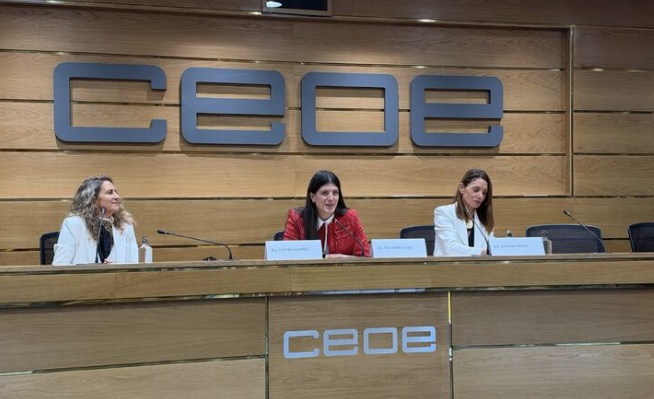
Roiback Participates in the Conference “The Balearic Islands: A Land of Opportunities for Strategic Projects” at the CEOE
By
Roiback
News
Roiback integrates DirectBooker to connect the direct channel with AI assistants
By
Roiback

News
What the Peak Season Leaves Behind: Data for Planning 2027
By
Roiback


