
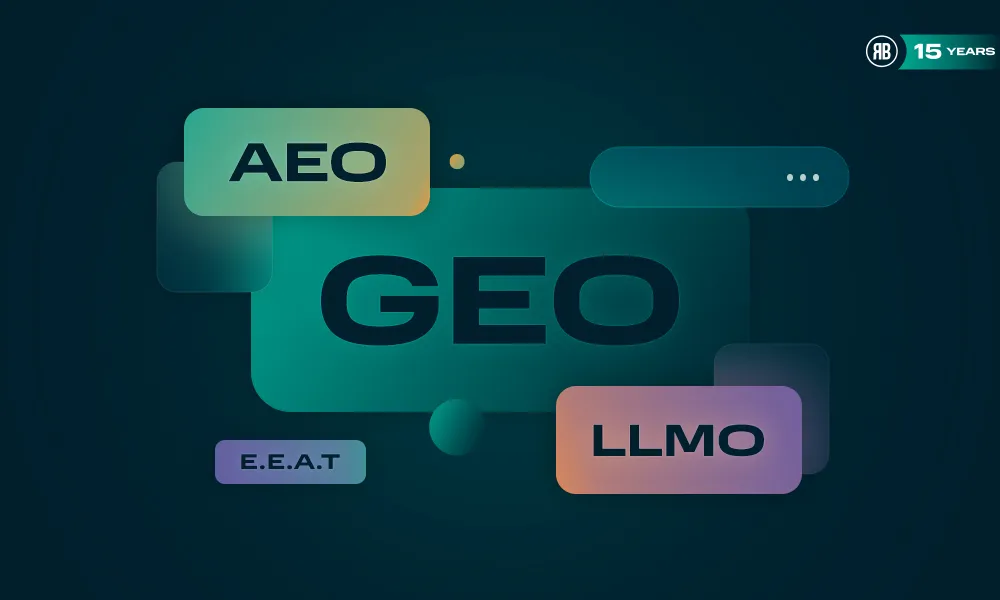
GEO, AEO, LLMO… Stop. Take a breath. Let's talk about what really matters: trust
News
June 25, 2026

Felipe Bravo (Roiback)
It's been going on for months.
Every so often, a new acronym pops up promising to revolutionize how you position your hotel online. GEO, AEO, LLMO, GSO, AIO, AISO. Each one has its own agency behind it, its own sales pitch, and its own argument for why SEO “is dead” and you urgently need this other thing.
And hotel marketing teams—who already have their hands full managing distribution, metasearch engines, paid campaigns, and the direct channel—suddenly find themselves facing a new layer of complexity.
I'm going to try to help you tune out that noise.
Because just a few weeks ago, Google published its first official guide on how to gain visibility in AI-powered search experiences. And the message is quite clear:
Google's AI features use the same index and quality systems that power traditional search.
Translated into the language of any hotel marketing director:
“If your website is relevant to Google today, it will also be relevant to AI tomorrow.”
The reality is that GEO is, to a large extent, SEO applied to the world of generative AI. There are technical nuances and new formats for consuming information, of course. But the fundamentals remain the same: relevance, authority, and trust.
And what is the framework that defines those fundamentals? E-E-A-T.
What is EEAT, and why should a hotel care?
E-E-A-T stands for Experience, Expertise, Authoritativeness, and Trustworthiness: Experience, Expertise, Authority, and Trust.
This is the framework Google uses to evaluate the quality of content and determine whether it deserves visibility. It’s not new—it’s been in Google’s quality guidelines for years—but it has become more relevant than ever because it’s also how AI models select the sources they use to generate their responses.
Think of it this way. A traveler asks ChatGPT,“What family-friendly hotel in Mallorca would you recommend for a trip with young children?”
The model doesn't come up with the answer on its own. It analyzes signals from various sources—including the official website, reviews, specialized media, maps, and directories—to identify which hotels seem most reliable, relevant, and worth recommending. It doesn't look for the one with a page optimized for that exact phrase. It looks for credibility.
And that's where E-E-A-T comes in
If you work on your hotel's E-E-A-T, you're simultaneously working on your SEO, your GEO, your AEO, and whatever acronyms may pop up next year. It's the only investment that never becomes obsolete.
Let's go through it letter by letter.
E for Experience
Google wants to identify content created by people who have actually experienced what they're talking about. For hotels, this is a huge advantage: no one knows the experience a hotel offers better than the people who work there.
The problem is that this experience often stays in the team's minds and never makes it onto the website.
3 specific actions:
- Publish content from the inside. Don’t copy the generic destination descriptions found on a thousand other websites. Write about what happens at the hotel during each season, what your team recommends, and what makes your area unique from the perspective of those who live there. An article by your chef explaining where the ingredients he uses come from, or a guide by the activities coordinator describing the excursion that families enjoy the most. Content that can only exist if someone has actually experienced it.
- Document real guest experiences. Authentic testimonials with names and context, real photos—not stock images—but the ones the guest posted on Instagram and gave you permission to share. Verifiable experiences are a sign of credibility that no user-generated content can replicate.
- Create destination guides based on your own criteria. “The restaurants our concierge recommends after ten years of serving travelers” is infinitely more valuable than yet another generic article about what to see in Mallorca. Your own criteria are what set an authentic experience apart from copied information. And update that content every season: an article from 2021 that hasn’t been touched sends a signal that the information is outdated.
E for Expertise (Knowledge)
Experience is having lived through it. Knowledge is understanding it in depth. Search engines and AI models place particular value on content that demonstrates true mastery of a subject.
For a hotel, the question is simple: Does your website show that you know more about your product, your destination, and your target traveler than any OTA or generic travel site?
3 specific actions:
- Target specific segments, not everyone. Don’t use generic phrases like “family vacations”; instead, say,“Why our hotel is the best option for families with children ages 3 to 8 in southern Mallorca,”using concrete arguments, detailed descriptions of our facilities, and real points of differentiation from the competition. The more specific the content, the more useful it will be to the user—and the more relevant it will be to the model that generates the response.
- Explain the details that no one else explains. What makes your mattress different? Why is the orientation of certain rooms better in July? What’s the real difference between your half-board plan and the competition’s? Product knowledge is the most underrated SEO asset for a hotel website. And publish with a byline: an article signed by “María González, Director of Operations, with 12 years in the hospitality industry” demonstrates expertise. One signed by “the marketing team” does not.
- Answer the questions that guests actually ask. The questions that come in at the front desk, the call center, or via email are exactly the same ones that travelers type into Google and ChatGPT. If you answer them better than anyone else—with more detail, more insight, and more context—you’ll rank higher than anyone else.
A for Authoritativeness (Authority)
Authority isn't something you claim for yourself. It's something others build for you when they talk about you.
For Google and AI models, external mentions remain one of the most important signals. It’s not enough to have experienced something or to understand it in depth—you need the ecosystem to recognize you as an authority.
3 specific actions:
- Actively engage with specialized media outlets. A mention in a relevant travel publication in your market is worth more in terms of authority than a hundred of your own posts. And you have something to offer that the media needs: access, experiences, and unique stories. Use it. Industry awards and rankings, hotel guides, editorial picks, and sustainability certifications work the same way: every appearance in a high-quality source is a signal that Google and LLMs value.
- Build relationships with specialized creators—not generic lifestyle influencers: travelers with targeted audiences, family bloggers, and destination experts. The quality of the audience matters far more than the volume. A well-placed mention in high-quality content builds real authority.
- Create content that others will want to cite. Original data on traveler trends at your destination, seasonal studies, and comprehensive guides that can’t be found anywhere else. If you publish something genuinely useful that no one else has published, others will link to it. That’s authority built from within—not bought or borrowed.
T for Trustworthiness
If I had to pick just one letter from E-E-A-T, it would probably be this one.
Trust is the quietest, but perhaps the most decisive, factor. This is especially true for LLMs, which have a very high aversion to reputational risk: they’d rather not cite anything at all than cite something incorrectly. For a hotel, trust is built on the details: ensuring that information is up to date, that what you describe matches what the guest finds upon arrival, and that the digital experience is consistent with the actual experience.
3 specific actions:
- Always keep your information up to date. Services , hours, cancellation policies, terms and conditions for each rate, and the hotel’s event calendar. A website with outdated or contradictory information sends a strong signal of unreliability, both to Google and to any AI model that reads it. And make sure information is consistent across channels: if your website says check-in is at 3 p.m. but Google Maps lists 2 p.m. and Booking.com lists “flexible,” you’re sending mixed signals that LLMs pick up on.
- Actively manage reviews, especially negative ones. Trust isn't built solely on 5-star ratings. It's built on how you handle 2- and 3-star ratings. An empathetic, honest, and solution-oriented response builds more trust than ten thank-yous for positive reviews.
- It shows signs of transparency: HTTPS , a clear privacy policy, real and verifiable contact information, and complete legal information. These are basics that many hotel websites neglect, and they directly affect how Google—and AI models—assess the reliability of a source.
And then there's the brand
Although it is not officially part of E-E-A-T, there is one element that seems to be growing in importance in AI-driven environments: branding.
When we look at how tools like ChatGPT, Gemini, or Perplexity respond, we see a recurring pattern. Well-known brands appear more frequently. Not necessarily because they are the best, but because they generate more trust signals across the internet: more mentions, more direct brand searches, more references, and more accumulated authority.
Brand building has never been more important for organic visibility. And it is directly related to another concept that AI models handle well: entities.
LLMs don’t just read words. They try to understand entities: a hotel, a brand, a destination, an experience. That’s why it’s becoming increasingly important to maintain a consistent and easily identifiable digital identity. Well-managed business profiles, consistent mentions across platforms, and a strong presence on various channels help these systems better understand who you are and what you stand for.
It's not a GEO tactic. It's a tactic of clarity.
So, what do we do about GEO?
Nothing radically different. And many of the same old things, just done better.
AI models prefer well-structured content, clear and direct answers, in-depth coverage of topics, verifiable information, and authoritative external sources. If you look closely at that list, you’re not looking at a revolution. You’re looking at good SEO, good content, and a good branding strategy.
Technical aspects—loading speed, structured data, FAQs marked up with Schema—are important too, and it’s definitely a good idea to have them in order! But they’re the plumber, not the architect. First, define what you want to build with E-E-A-T. Then call the plumber.
The summary worth saving
The flood of acronyms is here to stay. In a few years, new names will emerge, promising the ultimate formula for ranking on the next generation of search engines.
But the question will remain the same:
Does your hotel demonstrate experience, knowledge, authority, and trustworthiness?
Because AI is changing the way travelers find information. What isn't changing is how they decide whom to trust.
GEO may change its name several times in the coming years. New assistants, new interfaces, and new ways to search may emerge. But as long as search engines need to identify reliable, expert, and relevant sources, the answer will remain the same.
E-E-A-T is not a strategy for ranking on Google or ChatGPT. It is a strategy for becoming the correct answer, regardless of where the question is asked.
Read more

News
Roiback Receives Its Sixth Consecutive Award as the World's Best Hotel Booking Solutions Provider
By
Roiback
News
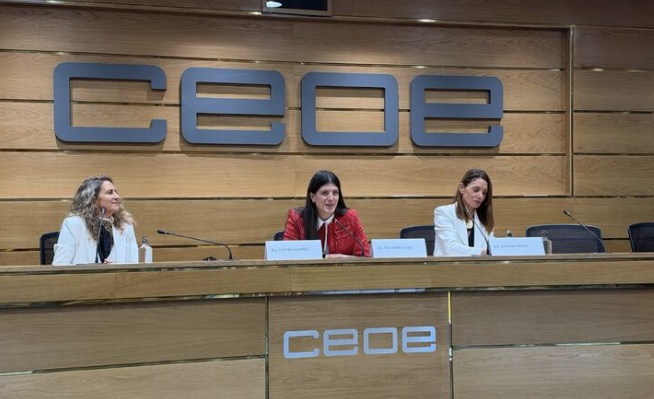
Roiback Participates in the Conference “The Balearic Islands: A Land of Opportunities for Strategic Projects” at the CEOE
By
Roiback
News
Roiback integrates DirectBooker to connect the direct channel with AI assistants
By
Roiback


