
Is your direct channel ready to grow in 2027?
News
September 23, 2026

7 Signs That Your Hotel Technology May Be Limiting Your Growth. Download our Checklist and assess whether your direct channel is ready to support your growth goals for 2027
The 2027 budgets begin to take shape well before January arrives. While sales teams set revenue targets and marketing managers review investments and priority markets, there is one question that often goes unnoticed:
Is the technology behind your direct channel ready to support that growth?
This is an important question because the problem usually isn't with strategy, investment, or demand. It often lies in a technology that worked well for years but is now struggling to keep pace with the market, travelers' expectations, and the operational complexity of hotels.
Many hotels realize this when they see how others are able to boost their direct bookings more profitably thanks to technology designed to convert better, adapt more quickly, and have a significant impact on results.
If your goal for 2027 is to grow your direct channel, now is the time to see if your technology can support the growth you're aiming for.
When Growth Is No Longer a Demand Problem
When direct bookings slow down, the typical response is to increase marketing spending, launch promotions, or step up customer acquisition campaigns.
However, in many cases, the challenge isn't attracting traffic, but converting it.
There is little point in increasing demand if users encounter a slow experience, complex processes, or technology that does not meet their expectations. Every point of friction reduces the likelihood of a booking and multiplies the cost of acquisition.
Furthermore, growth in the direct channel today depends on much more than just a website and a booking engine. Personalization, CRM, customer loyalty, automation, booking recovery, and a better understanding of guests are all part of the equation. Artificial intelligence is emerging as a tool that helps make these strategies more effective and scalable.
That is why, before considering new investments for 2027, it is a good idea to ask yourself a simple question:
Am I getting the most out of the demand I'm already generating?
Sign #1: Your conversion rate has been stagnant for some time
All hotel websites have room for improvement. The key is to identify when stagnant growth ceases to be a tactical issue and becomes a structural limitation.
If, over the past few fiscal years, you notice that:
- Traffic is increasing, but bookings are not keeping pace.
- Conversion improvements are minimal despite the optimizations we've made.
- Every increase in revenue requires more investment in customer acquisition.
- The abandonment rate for the reservation process remains high.
The problem might not be with your marketing strategy.
It may depend on your platform's ability to continue evolving.
In these cases, it is advisable to analyze the entire digital experience: loading speed, mobile experience, booking flow, personalization, payment methods, and the interaction between the various technological solutions involved in the process.
Key question: Am I generating more demand, or am I simply paying more to achieve the same results?
Sign #2: Your booking engine isn't keeping pace with the market
Travelers' expectations continue to evolve. Personalization is becoming increasingly important, mobile devices dominate much of the booking process, artificial intelligence is beginning to influence how travelers discover and consider hotels, and digital experiences are becoming more dynamic and contextual.
Given this situation, it is worth asking:
- How often does my supplier incorporate innovation?
- Is there a clear roadmap for development?
- Do the new features reflect actual market trends?
- Is the platform ready to take advantage of emerging technologies?
Technology shouldn't force you to adapt your strategy to its limitations.
It should help you execute your strategy more effectively and prepare for what comes next.
Key question: Is my booking engine helping me prepare for the future, or is it forcing me to work within the limitations of the past?
Sign #3: Every new integration turns into a complex project
Years ago, all it took was a website and a booking engine. Today, the direct channel is much more than that. Hotels operate within an increasingly connected ecosystem that includes:
- CRM.
- Loyalty Programs.
- Relationship Marketing Tools.
- Payment platforms.
- Guest engagement solutions.
- Contact centers.
- Analytics systems.
- Customization tools.
- Artificial intelligence platforms.
- Upselling and ancillary revenue solutions.
That's why the question is no longer whether your booking engine works.
The real question is whether your technology is capable of integrating with everything you'll need to compete in the coming years.
When every new integration involves complex development, multiple stakeholders, or lengthy implementation times, the hotel’s ability to innovate slows down. But there is an additional problem.
When guest data is scattered across different tools, it becomes more difficult to deliver personalized experiences, build loyalty, optimize marketing spend, or identify new revenue opportunities.
Technological flexibility is no longer an advantage. It is a prerequisite for growth.
Key question: Does each new integration accelerate my ability to innovate, or does it become a project that consumes time and resources?
Sign #4: Security is perceived as a technical problem rather than a competitive advantage
Cybersecurity is often analyzed solely from a risk perspective.
However, for a hotel, security has a direct impact on guest confidence, brand reputation, and operational continuity.
Hotels manage:
- Personal information.
- Payment Information.
- Transactions.
- Business-critical processes.
- Third-Party Integrations.
Therefore, the question is no longer whether security is important.
The question is whether the current infrastructure is ready to meet the technological and regulatory challenges of the coming years.
A sustainable growth strategy must be built on a robust, secure, and reliable platform to ensure stability in every interaction.
Key question: Do I have complete confidence that my current infrastructure will be able to meet the security, compliance, and stability requirements of the coming years?
Sign #5: Your provider resolves issues, but doesn't drive results
Many hotels offer technical support. Far fewer provide strategic guidance. And there is an important difference between the two approaches. Support resolves issues. Guidance helps generate results.
As technological complexity and the number of available opportunities increase, hotel teams need to answer questions such as:
- Where am I losing conversions?
- Which actions will have the greatest impact on revenue?
- Which features should I enable first?
- How should I prioritize my investments?
- What opportunities am I missing out on?
Technology creates possibilities, but true growth comes when someone helps turn those possibilities into business decisions.
That is why more and more hotels are looking for partners capable of combining a technology platform, market knowledge, and specialized advice.
Having specialists dedicated to direct channel performance makes it possible to identify opportunities, prioritize initiatives, and ensure that technology is aligned with the hotel's business objectives.
The difference between a supplier and a strategic partner often becomes apparent during times of transformation.
Key question: Does my provider help me make better decisions, or does he or she simply help me when a problem arises?
Sign #6: Your technology works today, but it won't scale for tomorrow.
This may be the most common scenario. Many hotels use solutions that work well on a day-to-day basis. The problem arises when they want to:
- Significantly increase the volume of direct reserves.
- Enter new markets.
- Add new customization features.
- Centralize guest data.
- Integrate new technological solutions.
- Automate business and operational processes.
What works for a particular business situation may begin to show its limitations as growth ambitions increase.
Scalability isn't just about handling more traffic or more reservations.
It also means being able to grow without technological complexity increasing at the same rate.
Key question: Is my technology ready to support my growth plans, or will I have to rethink my tools every time I want to take a step forward?
Sign #7: Your strategy is still optimized for search, even though travelers are already discovering hotels in new ways
The way travelers discover hotels is changing.
Traditional searches are increasingly coexisting with AI-powered recommendations, conversational experiences, digital assistants, and new discovery models.
At the same time, personalization is no longer just an optional feature—it has become an expectation.
The most competitive hotels no longer focus solely on how to generate more traffic.
They think about how:
- To be found in new digital environments.
- Better understand the user's intent.
- Personalize experiences in real time.
- Gather information about the guest.
- Make better business decisions based on data.
- Adapt quickly to new opportunities.
The leaders in direct-channel sales in 2027 won't necessarily be the ones who attract the most visitors.
They will be the ones with a platform capable of evolving rapidly, integrating with new opportunities, and capitalizing on innovation without having to rely on complex projects every time the market changes.
The question is simple:
Is my technology ready to adapt to how travelers will book tomorrow, or only to how they booked yesterday?
A good time to evaluate the situation before making a decision
Not all hotels need to switch providers.
But all hotels that aspire to grow should objectively assess whether the technology they use today is capable of supporting their future goals.
Waiting for problems to arise is usually the most expensive option.
On the contrary, reviewing aspects such as conversion, integration capabilities, scalability, security, innovation, and strategic support in advance allows for more informed decision-making and reduces risks.
Because the key question isn't whether your direct channel is working today.
The question isn't whether your direct channel works today. It's whether it will continue to be a competitive advantage in 2027.
"Hotels don't usually lose momentum due to a lack of demand. Often, they lose it because their technology stops keeping pace with their goals."
Before setting your goals for 2027, ask yourself these three questions:
- Do I have a platform that's ready to evolve with the market?
- Do I have a connected HotelTech ecosystem that allows me to innovate quickly and leverage guest insights?
- Do I have access to the strategic guidance needed to turn technology into results?
The coming years will be shaped by hotels' ability to integrate technology, data, and expert knowledge.
Those who succeed will be better positioned to increase conversion rates, profitability, and direct-channel market share.
Would you like to assess the maturity level of your direct channel?
Download our free checklist and find out in less than 2 minutes whether your website, booking engine, and HotelTech ecosystem are ready to support your growth goals for 2027.
Read more

News
Roiback Receives Its Sixth Consecutive Award as the World's Best Hotel Booking Solutions Provider
By
Roiback
News
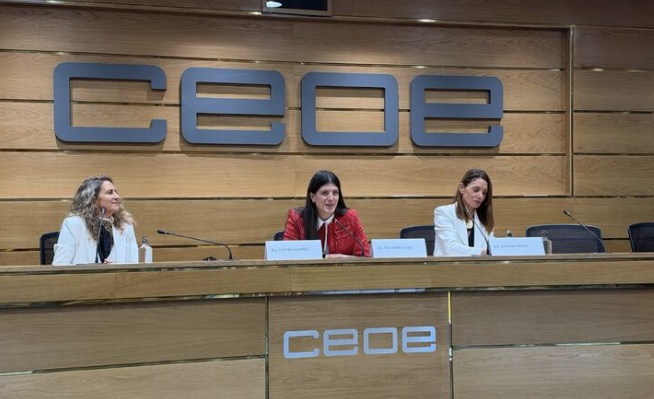
Roiback Participates in the Conference “The Balearic Islands: A Land of Opportunities for Strategic Projects” at the CEOE
By
Roiback
News
Roiback integrates DirectBooker to connect the direct channel with AI assistants
By
Roiback


